The Pulley at a Window Blind: Guiding a Cord Around a Wheel
A window blind pulley guides a cord around a turn. Learn how to identify its role, understand its limits and decide when a repair needs expert attention.
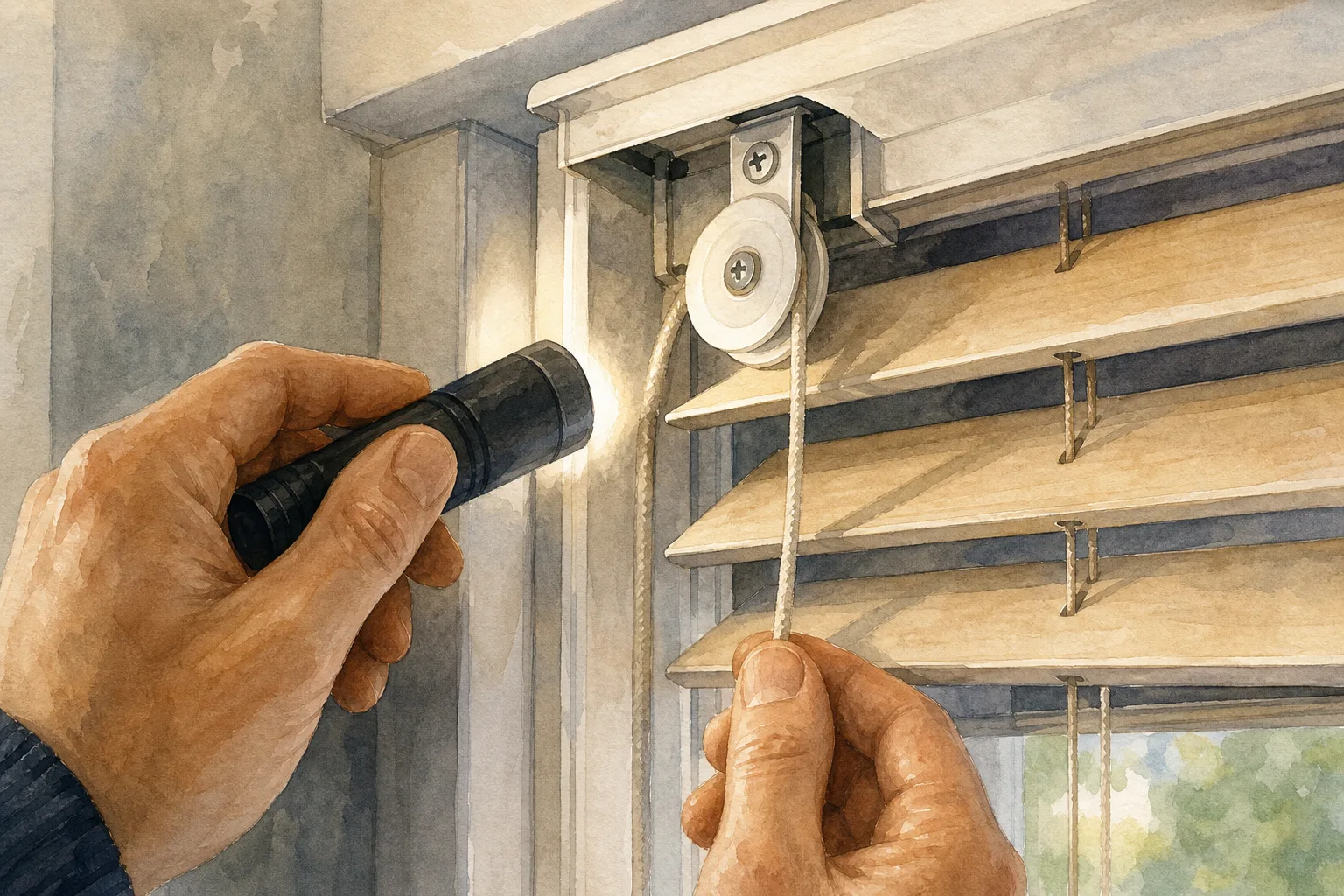
A window blind pulley guides a cord around a turn, but it cannot correct every stiff or uneven blind. On a conventional cord-operated blind, a fixed wheel can redirect the pull; other designs use different routes, so the cord’s path tells you what the wheel is doing.
That distinction changes the repair decision. A cord rubbing on a frame may need a clear route, while a blind that catches as it rises may have a fault in its lift mechanism instead.
Follow the cord route
Trace the cord visually from the point where you pull it towards the headrail, without tugging if it is caught. In a compatible arrangement, a fixed pulley is attached to a stationary part and turns as the cord passes over it. The wheel redirects the pull; it does not, by itself, make the blind’s load lighter.
Some blinds use a beaded chain, enclosed lift components or another mechanism rather than an exposed cord and guide wheel. A pulley that looks similar may be intended for a different route, just as the wrong-sized button will not sit properly in a buttonhole.
Use a small torch to see the headrail and mounting point. Keep the blind supported while inspecting it, and do not pull hard against a snag: if a part is difficult to reach or its function is unclear, stop and consult a qualified blind repairer.
Read the signs
Look for where the cord touches the frame, whether it sits in the wheel’s groove and whether the wheel appears cracked or obstructed. These observations can help distinguish a routing problem from a damaged part, but they do not establish that the pulley is the only cause.
If the cord follows its intended route yet the blind tilts, catches or rises unevenly, the lift cords, slats or internal mechanism may be involved. Replacing a guide wheel alone may leave that problem unchanged.
Assess the fit
Before considering a replacement, compare the proposed part with the original and the blind’s actual cord system. Use these observations to decide what to do next:
- Mount: If the screw position or clip matches the existing fitting and sits securely, continue checking the other details; if it does not, find a compatible mount or ask a repairer to identify the fitting.
- Cord type: If the blind uses a plain cord and the wheel is made for that cord, continue; if it uses a beaded chain or loop, choose a guide designed for that system instead.
- Groove: If the cord rests in the groove without being pinched or riding its edge, continue; if it does either, select a wheel with a suitable groove.
- Wheel condition: If the wheel turns freely and has no visible crack, inspect its alignment; if it is seized or damaged, replace it with a compatible part rather than relying on it.
- Route: If the cord clears the frame and headrail, check the blind’s movement; if it scrapes an edge, correct the route or seek a suitable guide rather than pulling harder.
- Blind movement: If the blind moves smoothly with the cord in its intended route, the guide may have contributed to the trouble; if it still catches or rises unevenly, stop treating the pulley as the sole cause and seek further inspection.
Material is a secondary consideration. A plastic or metal wheel still needs the right mounting and groove for the cord it is meant to guide.
When does a blind pulley help?
Does a fixed pulley make lifting easier?
Its usual job in this arrangement is to redirect and guide the cord, not to reduce the load. A clear route may remove rubbing, but a fixed wheel does not make the blind’s weight disappear.
Why might a cord leave the groove?
The wheel may be out of alignment, the groove may not suit the cord, or another part may be drawing the cord sideways. If the cord escapes again after the route is checked, have the lift arrangement inspected instead of repeatedly repositioning it.
Can any small wheel replace the original?
No: the mount, groove and intended cord or chain all need to suit the blind. If one of those features does not match, choose a different fitting or ask a repairer to identify the correct part.
What does visible cord damage mean?
Fraying, flattening or other visible damage means the cord should not be treated as sound just because a guide is replaced. If the lift mechanism is worn or its condition is unclear, seek advice from a qualified repairer.
A worked route check
Imagine a blind with one exposed cord, one fixed wheel and a cord that scrapes the headrail. The starting observations are specific: the cord is out of the groove, the wheel turns freely, its mount is intact, and the blind moves smoothly when the cord is held in its intended route.
First, support the blind and use a torch to inspect the route, without pulling against the scrape. Next, compare the wheel’s groove and mount with the cord and its existing fitting; because the wheel turns freely and the mount is intact, those observations point towards checking alignment and cord position rather than replacing the wheel immediately. Then restore the cord to its intended path only if it can be done without force.
The expected observable result is that the cord travels without scraping. If it slips out again, the route remains misaligned or another part is pulling it sideways; if the blind still catches, the lift mechanism needs attention. In either case, stop rather than forcing the cord or fitting a wheel that does not match.
Choose the right part
A window blind pulley is useful only when the blind’s design calls for that wheel and the cord runs cleanly through it. Check the route, mount, groove and wheel movement as separate clues; together, they help you decide whether the issue is a guide, a damaged cord or a wider lift problem.
Related mechanisms
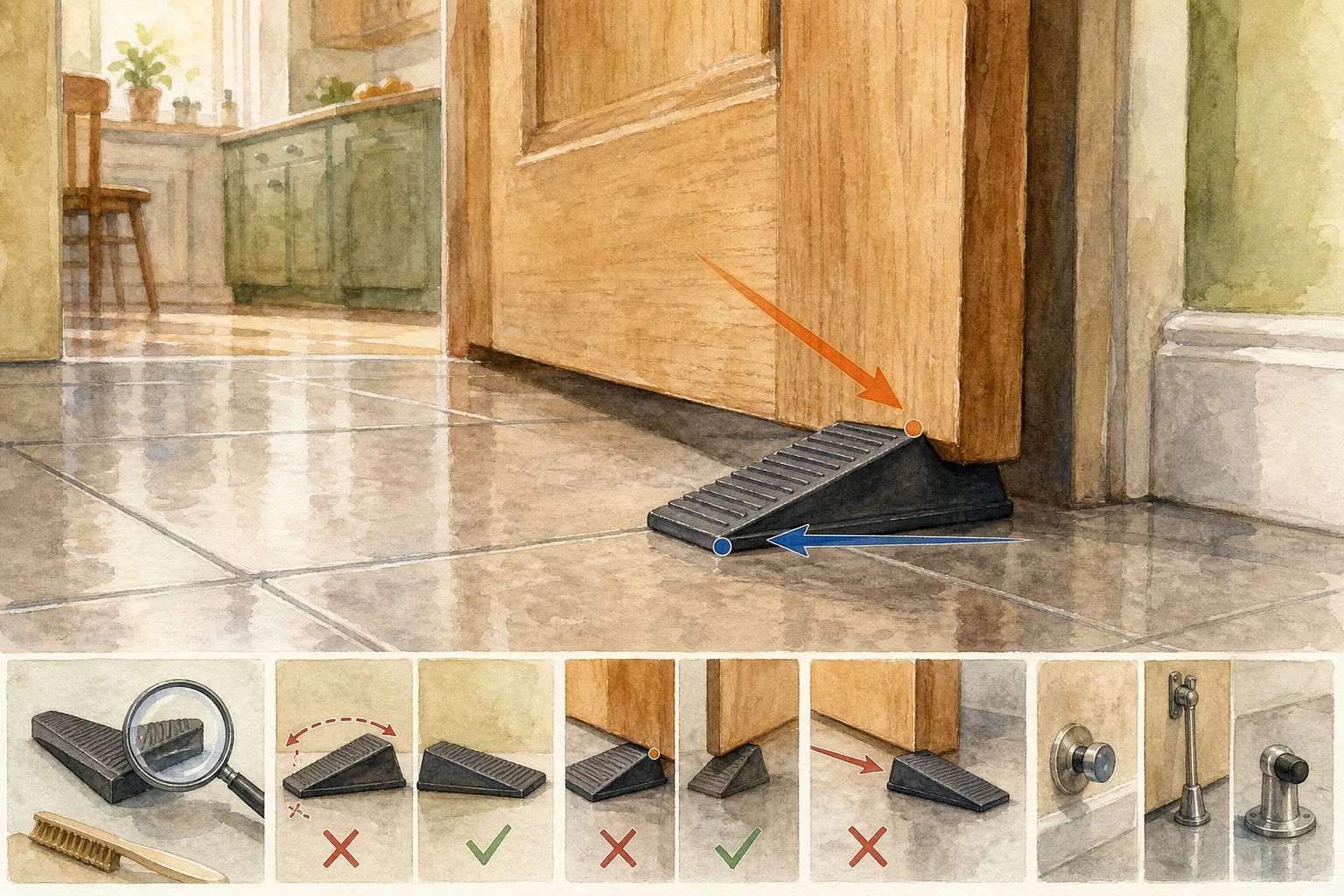
The Doorstop as a Wedge: Why a Small Taper Holds a Door
Doorstop wedge mechanics show how taper, contact and fit affect a door’s movement, helping you identify…
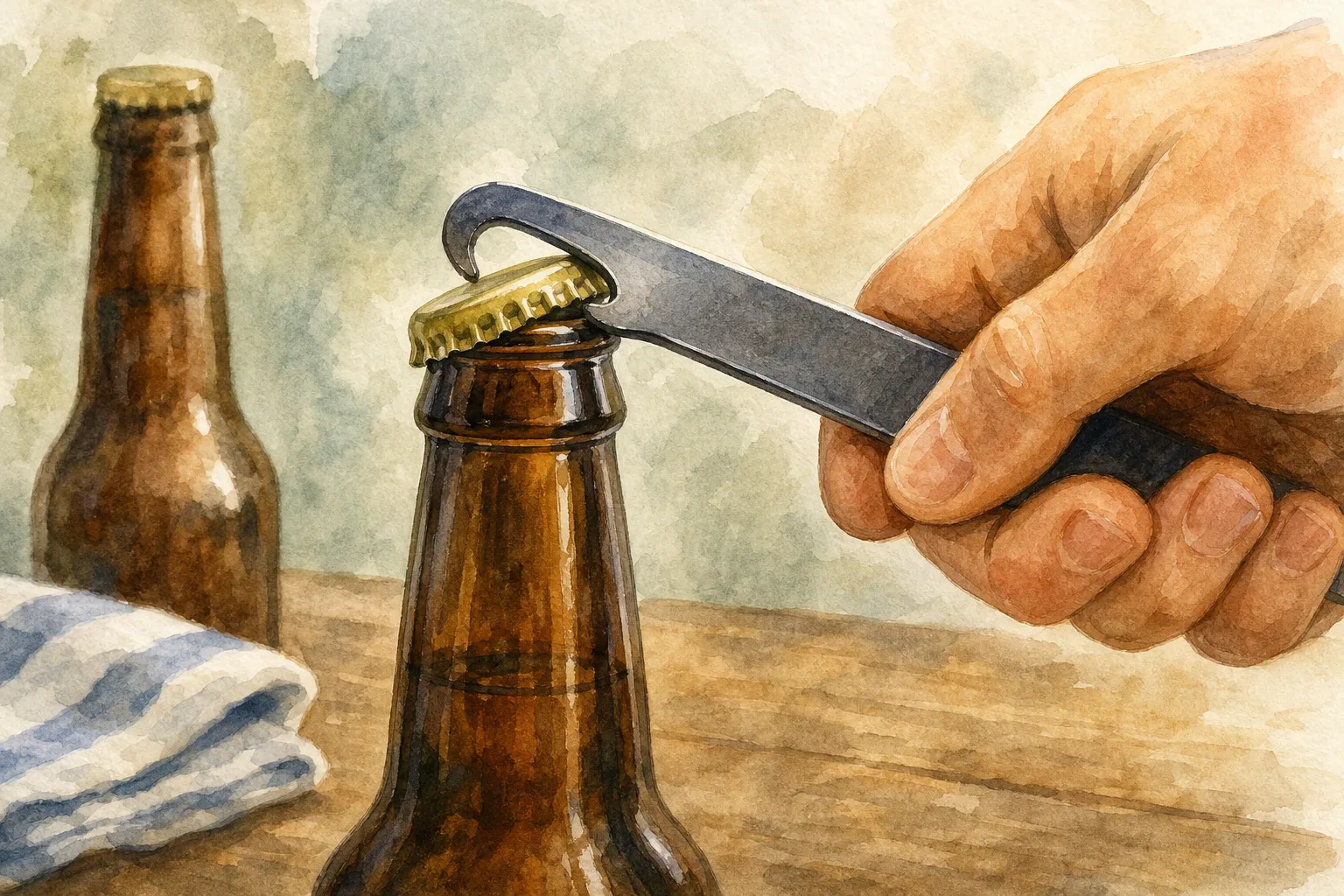
A Bottle Opener and the Leverage Behind Its Handle
Bottle opener leverage explains how the hook, bottle rim and handle work together, helping you understand…