A Bottle Opener and the Leverage Behind Its Handle
Bottle opener leverage explains how the hook, bottle rim and handle work together, helping you understand the cap’s release and recognise when to reset the tool.
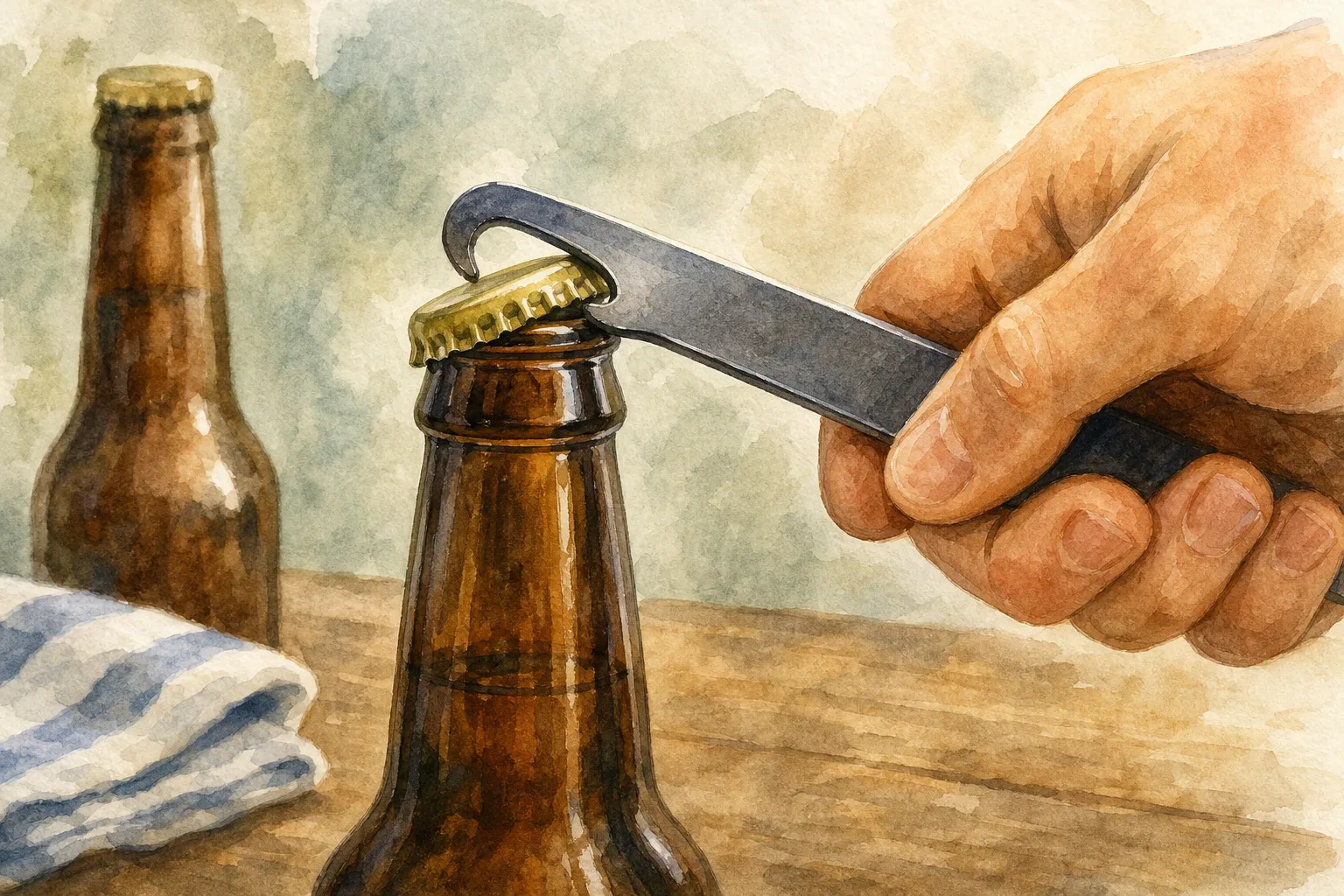
Bottle opener leverage comes from three parts working together: the hook, the bottle’s rim and the handle. On a crown-cap opener, the hook catches beneath the folded edge while the opener bears against the rim; turning the handle then lifts one part of the cap’s crimp.
The lever arrangement
The hook is the load point, where the tool acts on the cap. The hand applies effort at the handle, and the bottle rim provides the fulcrum—the support around which the opener turns.
That fulcrum is a contact rather than a hinge. As the opener settles, the precise spot bearing on the rim can shift, so the tool’s shape helps it stay supported during the turn.
When the hook catches and the rim supports the opener, the handle’s movement lifts the crimp. If either part loses contact, the opener may rock or slide instead of turning the cap.
Effort and movement
The hand acts farther from the fulcrum than the hook does. This gives the hand a longer distance over which to move, while the hook travels a shorter distance at the cap.
The arrangement resembles a long-handled spoon resting against a bowl: the handle moves through a broad arc while its working end shifts near the support. Unlike a spoon, an opener must also hold its hook beneath the metal edge.
A lever changes how effort is applied; it does not create energy. Friction at the rim, the stiffness of the opener and the cap’s grip all influence how the turn feels.
How the cap releases
A crown cap grips the bottle around its folded skirt. The opener raises one section of that skirt, allowing the cap to tilt as part of its grip loosens.
The hook does not need to raise the entire cap straight upwards. Once one section moves away from the rim, the changing angle helps the rest release. The handle can move gradually even if the cap’s final release feels abrupt.
Different opener forms
Flat steel openers, thicker bar openers and models with broad grips vary in shape. For crown caps, each needs a hook that can engage the folded edge and a bearing surface that can rest against the bottle rim.
A longer handle places the hand farther from the fulcrum, but it also needs more room to swing. A broad or shaped bearing surface may make the support easier to place; the useful form depends on the bottle and the space available.
Ring-pull tools and winged corkscrews use different mechanisms because they engage different closures. A crown-cap opener’s hook-and-fulcrum arrangement is not a description of those tools.
Bottle opener leverage questions?
Where is the fulcrum on a bottle opener?
It is the point where the opener bears against the bottle as the handle turns. On a typical crown-cap opener, this contact is near the rim rather than at a separate hinge.
Why does a longer handle help?
A longer handle places the hand farther from the fulcrum, so the hand’s effort has a longer lever arm. The trade-off is a wider handle swing, while the hook moves a shorter distance.
Does the opener lift the whole cap at once?
No. The hook first raises one section of the folded edge, letting the cap tilt as its grip loosens. The remaining edge can then release.
What should I do if the opener slips?
Stop and check whether the hook is beneath the folded edge and the bearing surface rests on the rim. Reposition the tool rather than pushing harder, and set aside a bottle with chipped or cracked glass.
A worked cap opening
Imagine an invented situation: one intact crown-capped bottle and one flat opener that slips on the first attempt. The starting inputs are the bottle, the opener and the cap; no measurements are needed to decide what to do.
First, stop the turn and inspect the bottle glass. If it is chipped or cracked, the decision is to set it aside; in this imagined case it is intact, so proceed. Next, place the hook beneath the folded cap edge and settle the bearing surface on the rim, not the glass neck.
Hold the bottle steady, keep fingers clear of the cap and raise the handle in a controlled motion. The expected observable result is that one part of the crimp lifts and the cap tilts; if the opener slides again or bends, stop and choose a sound tool rather than adding force.
Checks before turning
- Observe whether the hook sits beneath the folded cap edge. If it does, make a controlled turn; if it does not, reposition the opener first.
- Observe whether the bearing surface rests on the bottle rim. If it does, proceed carefully; if it slides, reset the support before applying effort.
- Observe whether the bottle glass is chipped or cracked. If it is intact, hold it steady; if it is damaged, set the bottle aside.
- Observe whether the opener is bent, cracked or loose. If it is sound, use it with a controlled motion; if it is damaged, stop and choose an undamaged tool.
- Observe whether your fingers are clear of the cap edge and handle path. If they are, raise the handle; if they are not, change your grip before moving the opener.
- Observe whether the cap begins to tilt as the handle turns. If it does, continue carefully; if it does not, stop and recheck the hook and rim support.
Reading the mechanism
To understand bottle opener leverage, trace the load at the hook, the fulcrum at the rim and the effort at the handle. Their positions explain why the handle moves through a broader arc while the hook lifts only part of the crimp.
Before turning, notice whether the hook and support are seated. If either shifts, resetting the opener gives you a clearer starting position than forcing the lever.
Related mechanisms
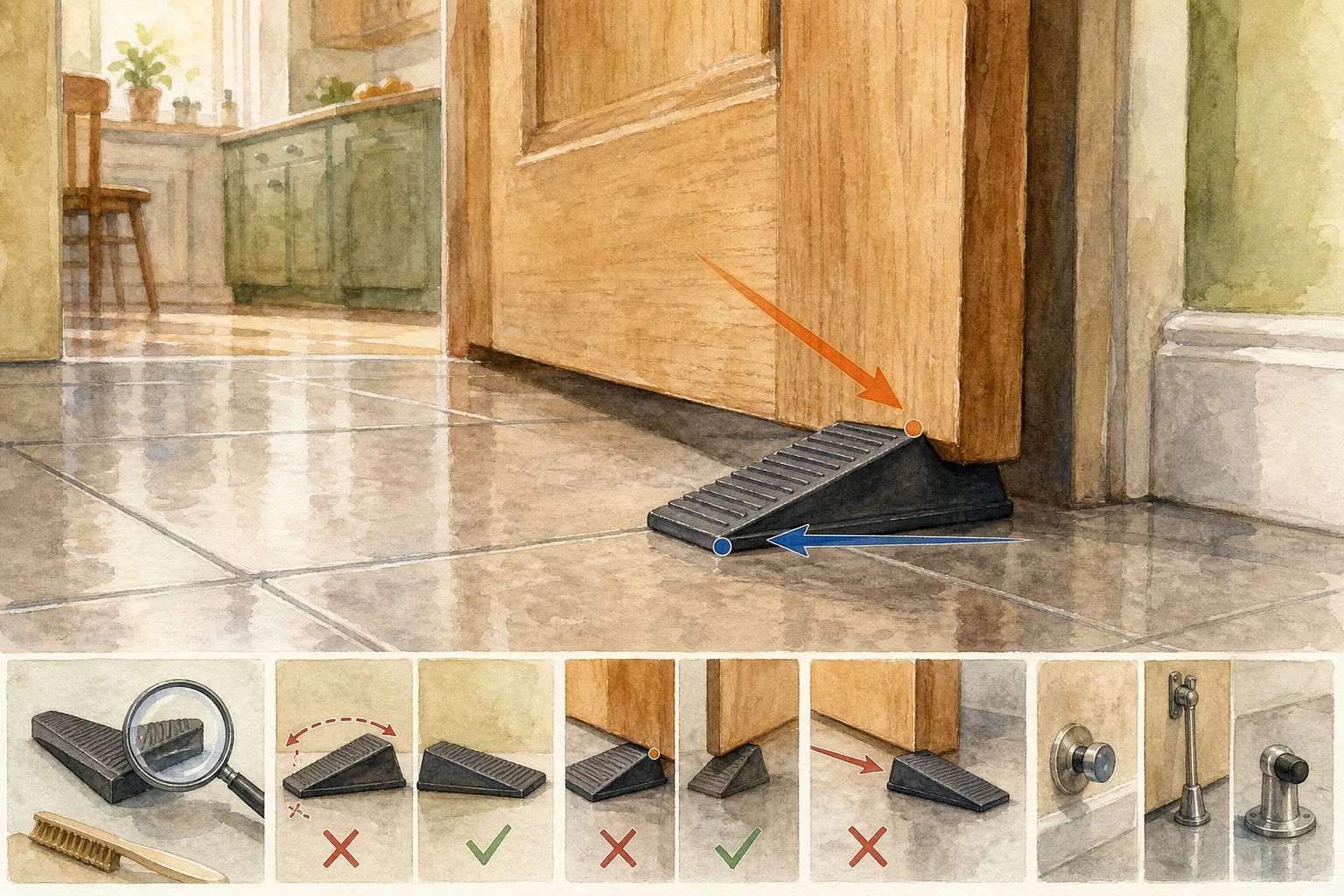
The Doorstop as a Wedge: Why a Small Taper Holds a Door
Doorstop wedge mechanics show how taper, contact and fit affect a door’s movement, helping you identify…
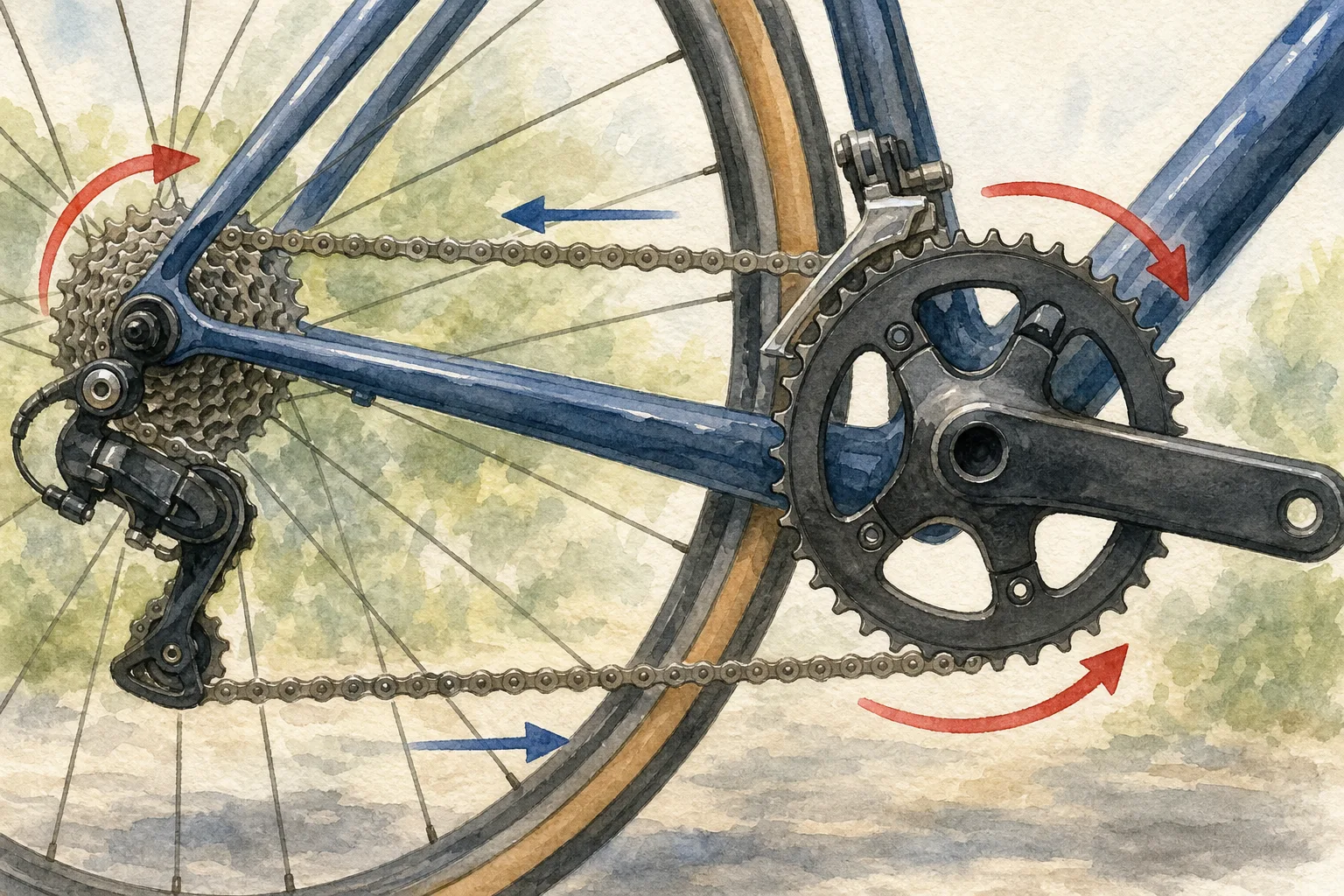
Bicycle Gear Ratios: How Teeth, Rotation and Direction Relate
Bicycle gear ratios make tooth counts easier to interpret: see how chainrings and sprockets relate to…