What Paper Fibres Change in a Sheet
Paper fibres affect how a sheet folds, feels, and takes ink. Learn which paper qualities matter for writing, printing, wrapping, and other everyday jobs.
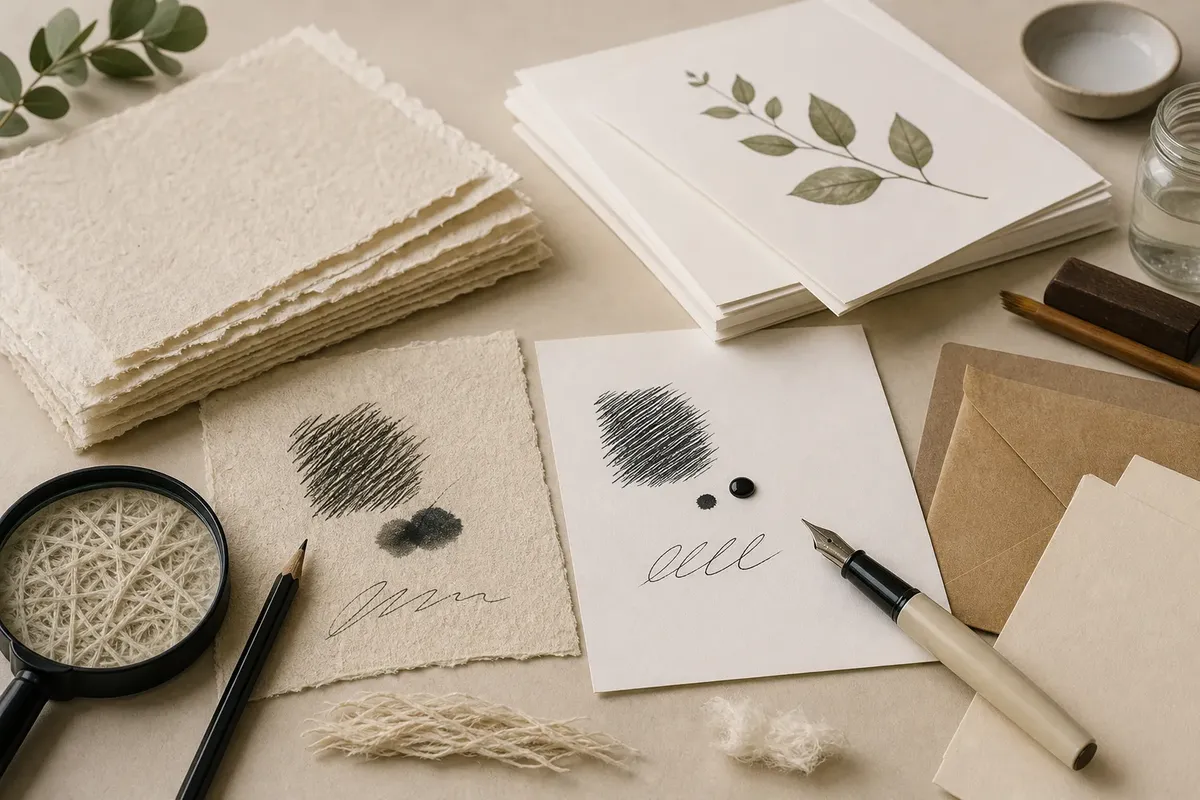
Paper fibres affect how a sheet folds, feels, and takes ink. Pick up a sheet meant for a paper bag beside one meant for a printed invitation, and the difference is more than thickness: the fibre network and surface finishing suit different jobs.
How do fibres become a sheet?
Most paper fibres come from plants, especially wood. They are narrow strands of cellulose, a structural material in plant cell walls. During papermaking, pulp fibres are mixed with water, spread into a thin layer, then pressed and dried. As the water leaves, fibres settle into contact and bond at many points.
The pulp and the finishing both matter. Wood pulp can contain varying amounts of cellulose, hemicellulose, and lignin depending on how it was prepared. Some papers use cotton or other plant fibres. Fillers, coatings, and other additives alter the final sheet, so the word “fibre” describes part of the structure, not the complete recipe.
Does fibre length decide whether paper is strong?
Longer fibres can connect across a broader area of the sheet and often help it resist tearing. Shorter fibres can pack into a more even surface. Neither is automatically better: a paper intended for a bag has different demands from one intended for fine lettering.
Think of the sheet as a network, not a bundle of parallel strings. Fibres overlap and bond in many directions. A long strand may bridge a weak spot; a close arrangement of shorter fibres may help produce a consistent surface. Bonding and finishing influence the result as much as length does.
Say you have two sheets for a small stationery order: a rough, sturdy sheet for folded enclosures and a smoother sheet for printed invitations. You plan to print on both and fold each. Check how the ink sits, then make a fold along and across the grain on each sheet. If the rough sheet tears less readily but blurs fine lettering, assign it to the enclosures; if the smooth sheet keeps the lettering clear and folds cleanly, use it for the invitations. If neither gives the needed combination, choose a different finish rather than assuming longer fibres will solve both problems.
What does paper grain change?
Paper grain is the direction in which more fibres tend to lie. In machine-made paper, fibres often align more with the machine’s direction of travel than across it. The sheet can therefore behave differently along its length and width.
A fold with the grain generally makes a cleaner crease; a fold across it may resist or look rougher. Grain also affects bending and the sheet’s response to moisture. Handmade paper can have a less consistent orientation, but the fibres still form a network. Grain is not a stripe or a separate layer.
To identify the likely grain without special equipment, gently bend the sheet in each direction without making a crease. The easier, more yielding bend usually follows the grain. Treat this as a useful clue, not a precise measurement; paper construction and handling can complicate the feel.
Why can a stiff sheet still tear?
Strength comes from both the fibres and the bonds between them. A sheet may resist bending because it is stiff, yet tear readily if the network does not hold together well. Another sheet may bend easily and still resist tearing. Thickness alone cannot tell you how a paper will behave under repeated folds.
Moisture can weaken some bonds between fibres, making paper easier to bend or tear. A damp sheet may dry into a different shape or feel than before. How much it changes depends on the paper and what happened to it.
How do coating and texture affect ink?
Surface feel depends on how evenly fibres lie, how the sheet was pressed, and whether it received a coating. Coated paper has an added surface layer that can reduce visible irregularities and influence how ink sits. Uncoated paper leaves more of the fibre structure exposed.
On absorbent, uncoated paper, ink may sink into the fibres and spread. A coated surface tends to keep ink closer to the top, which can preserve detail. The right match depends on the ink and printing method. A smooth sheet may suit small type, while a textured one gives pencil or brush more variation to catch against.
For handwriting, consider the tool as well as the paper. A slick surface may feel comfortable with a ballpoint but offer little grip for pencil. Fountain-pen users may care about feathering, where ink spreads along fibres, and show-through, where marks are visible from the other side. Labels and product information can clarify a sheet’s intended use; follow the manufacturer’s directions where handling or compatibility matters.
Which questions help you choose paper?
Are longer paper fibres always better?
No. Longer fibres can help a sheet resist tearing, but a smooth, even surface may need a different balance of fibres and finishing. Choose for the job, whether that means folding, print detail, or tactile feel.
Can you see individual paper fibres?
Usually not without magnification, though rough or handmade paper may show visible strands. Surface feel comes from many fibres, their bonds, and any coating together.
Does recycled paper contain shorter fibres?
Recycling can shorten fibres during processing, but recycled sheets vary in their blend and treatment. A label alone does not reveal the complete composition or predict how a sheet will handle.
Why does paper tear differently in each direction?
Fibre alignment gives many machine-made papers a grain, so a sheet can respond differently along and across it. Bonding, thickness, and composition also affect where a tear travels.
What should you check before choosing a sheet?
Start with the actual job. Use these observations to decide whether a candidate paper is suitable or whether to compare another sheet.
- Check whether a gentle fold along the grain makes a clean crease; if it does, use that direction for a fold that needs to look neat, and if it resists or splits, try the other direction or another sheet.
- Check whether a printed line stays sharp on the surface; if it does, use the sheet for detailed printing, and if it feathers or blurs, choose a different finish or a paper intended for that ink.
- Check whether a pencil moves with the grip you want; if it does, keep the sheet for drawing or notes, and if it skids or catches too much, compare a different surface texture.
- Check whether the sheet bends without cracking where the item must wrap or fold; if it does, use it for that construction, and if the fold roughens or splits, change the grain direction or choose another stock.
- Check whether marks show through to the reverse in the lighting where the page will be read; if they do, use a less transparent sheet or a different writing tool, and if they do not, keep the candidate for that use.
- Check the product description for coating or a stated printing purpose; if it matches your ink and printer, follow those directions, and if the description is unclear, ask the supplier or compare a labelled alternative.
It is not worth trying to identify a sheet’s plant species by touch. Surface feel cannot reliably disclose the pulp blend, and that detail rarely settles an everyday choice. The useful question is whether the sheet handles the task in front of you.
Paper fibres change how a sheet feels, folds, and takes ink, but no single trait decides all three. Grain, bonding, surface treatment, and intended use work together. For a practical paper-fibres choice, judge the sheet by the fold, mark, or printed detail it must handle, then let the result—not a vague label such as “smooth” or “heavy”—guide the decision.
More to consider
Why a Zipper Needs Two Rows of Teeth
Why a zipper needs two rows of teeth: see how opposing elements and the slider form…

Borrowed Words, Changed Sounds
Borrowed words can keep their original spelling while pronunciation shifts. Learn how to compare written forms,…