The Place Card and the Shared Table
A place card can ease arrivals and help guests settle. Learn when to assign seats, when to leave them open, and how to make the choice feel welcoming.
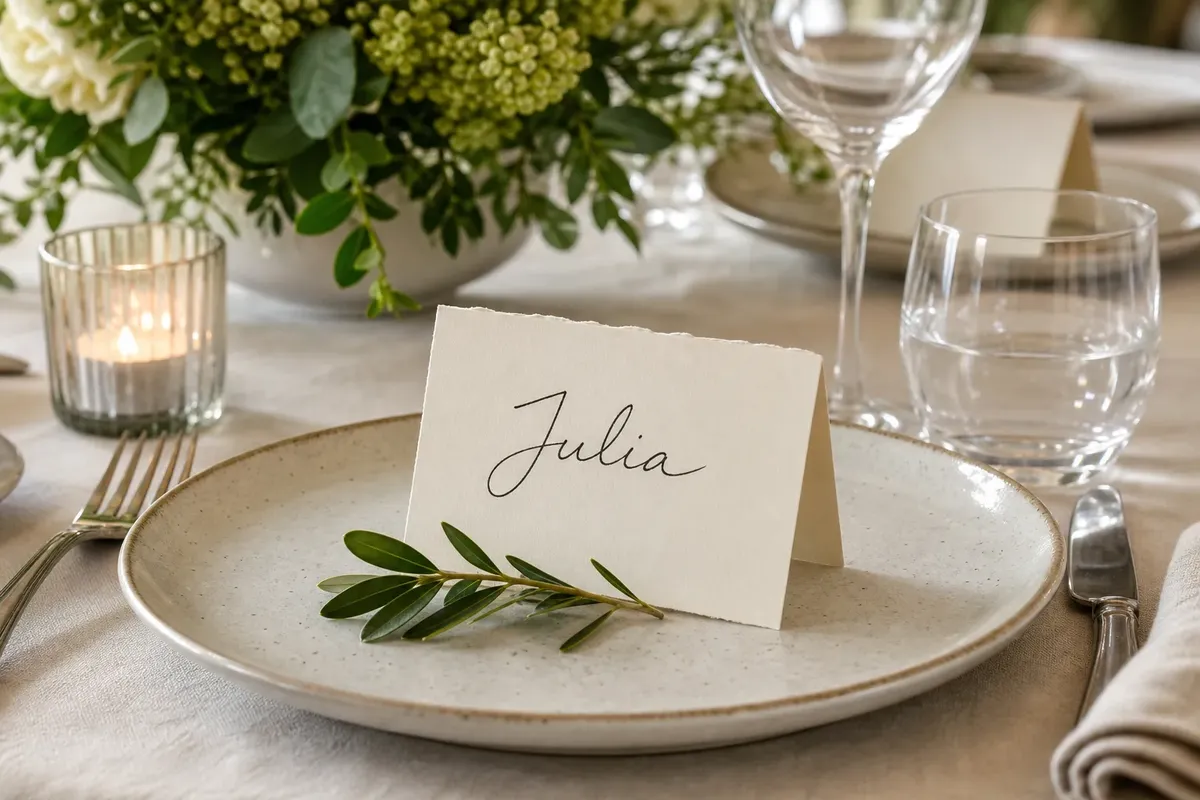
At a dinner where two guests have never met, a card bearing each name can answer an awkward question before anyone has to ask it: where should I sit? Place cards for a dinner party assign seats, but they also send a social signal: welcome, care, familiarity—or, if handled clumsily, rank.
The choice depends less on how formal the meal sounds than on what guests need from the arrangement. A named seat can ease a crowded entrance and give conversation a starting point. At a relaxed gathering, the same card can make a friendly room feel like a seating examination.
What does a place card tell your guests?
At its most useful, a place card says, “You have a place here.” It removes the need to scan the table, negotiate with other guests, or wonder whether a chair is saved. That reassurance matters when people arrive together, do not know one another well, or might otherwise have to make a conspicuous choice.
An assignment is also public. Guests may notice who sits beside the host, who is near a prominent guest, or whether a couple has been separated. A handwritten name can carry more social information than its small square of paper suggests.
The card need not explain the host’s reasoning. A seat can make conversation easier without announcing that one guest needs help, another should be kept apart, or someone has been given a place of honour. Discretion is part of the hospitality.
Should you assign seats or leave them open?
Assign seats when the table has a practical constraint or a little social guidance will make arrival easier. This can help at a long dinner, among unfamiliar guests, or when someone needs a particular seat. Thoughtful placement need not make the evening formal.
Leave seats open when guests know one another, the table is easy to navigate, or people may want to move around. An open arrangement can suit a casual brunch or a meal with staggered arrivals, provided there is enough room and no one is left guessing which chair is available.
A middle course is to assign only the seats that matter. You might reserve a place for someone who needs to be near an exit while leaving the rest of the table open. Make the boundary clear; otherwise, guests can mistake an unmarked seat for one that has been claimed.
Say you are hosting a dinner for six: two longtime friends, two relatives who have not met, and two guests who know everyone only through you. You place each newcomer beside someone likely to include them in conversation, then leave the other seats flexible. As guests arrive, the named places give the newcomers an obvious starting point; the open seats leave the familiar group room to choose. If that split leaves someone uncertain about which seats remain available, mark those as open or explain the arrangement at the door.
Which seating choice fits the gathering?
Use the circumstances, not the occasion’s label. A birthday meal can be informal or carefully arranged; a weekday supper can still benefit from a few assigned places.
- Guests are meeting for the first time: Check whether newcomers have an easy conversational opening. If they might hesitate or sit apart, place each beside someone who can include them; if the group is small and already mingling, leave seats open.
- Guests arrive at different times: Check whether late arrivals would need to interrupt people who have settled. If they would, mark seats near an easy entrance to the table; if guests will come and go freely, leave places open and tell them which chairs are available.
- Someone has a seating preference or access need: Check privately what location would work. If the guest names a suitable seat, reserve it discreetly; if they prefer to choose on arrival, keep options open and offer assistance without making the need a public announcement.
- There is tension between particular guests: Check whether distance would make the meal more comfortable. If so, assign seats that give them space; if the concern is uncertain, ask discreetly rather than staging a reconciliation at dinner.
- The group is close and the meal is casual: Check whether everyone can find a seat without confusion. If they can, let guests choose; if the table layout or arrival pattern could cause a scramble, mark a few places or give a simple verbal direction.
- One guest has a central role in the occasion: Check whether they need to greet people or join the conversation easily. If so, choose a seat that supports that role; if a prominent placement could look like a ranking, choose a less conspicuous spot.
What is not worth the effort is mapping every exchange in advance. Place cards cannot script lively conversation, and trying to produce a perfect pairing at every seat turns a welcoming gesture into needless choreography. Aim for comfort and an easy start.
How can you make assigned seats feel welcoming?
Put each card where the guest can see it while approaching the table. A folded card beside a plate is familiar; a card at the entrance may be easier to spot when the room is busy. Use the name the guest recognizes, not a formal version that sounds distant at a relaxed meal.
Keep the wording plain. A name is usually enough. Titles, elaborate descriptions, or jokes that depend on private knowledge can make a small object feel like a test of belonging. If you are unsure which name a guest prefers, ask privately before writing it.
Consider how the guest may read the placement, not only what you intend. Seating a couple apart can encourage wider conversation, but it can also make one or both people feel managed. If you do not know their preference, keeping them together is a considerate default; if separation seems useful, ask beforehand. The same courtesy applies when someone may need a particular location.
Make the arrangement easy to change. Guests may bring an unexpected companion, need to leave early, or find another seat more comfortable. Treat the plan as a helpful starting point, not a rule to defend. Adapting without fuss is a clearer sign of welcome than protecting the seating chart at all costs.
What do guests usually wonder about place cards?
Do place cards mean the dinner is formal?
No. A card can help guests settle at a casual meal. Its style and the host’s manner usually say more about formality than the presence of a name.
Should couples sit together?
That depends on the guests and the purpose of the gathering. Keeping a couple together is a considerate default when you do not know their preferences; separating them makes more sense when you have reason to think they will welcome it.
Is it rude to move a place card?
Not automatically, though it is courteous to check with the host if the assignment seems deliberate. A card may reflect a practical need, so a quick, quiet question can prevent a misunderstanding.
What if a guest’s name is difficult to spell?
Ask the guest how they write it, then copy that spelling carefully. If you are uncertain, a private message is better than guessing on a card visible to the table.
When does a place card become a social signal?
It becomes one when an arrangement makes a relationship visible. Placing a guest beside the host can suggest closeness or offer support; seating two strangers together can show confidence that they will get along. Separating guests may prevent friction, but it can also disclose that the host expects it. The card is quiet, not neutral.
That does not mean every placement needs elaborate interpretation. Most guests are looking for a chair and a way into the conversation. A thoughtful arrangement can address that basic need without announcing itself.
For place cards at a dinner party, keep the decision modest: make arrival easier, support comfort, or give conversation a sensible opening. If those aims conflict, prioritize the guest who would otherwise have the least freedom to choose. A named seat works best when it makes the shared table feel more open, not more controlled.
More to consider
Why a Zipper Needs Two Rows of Teeth
Why a zipper needs two rows of teeth: see how opposing elements and the slider form…

Borrowed Words, Changed Sounds
Borrowed words can keep their original spelling while pronunciation shifts. Learn how to compare written forms,…